
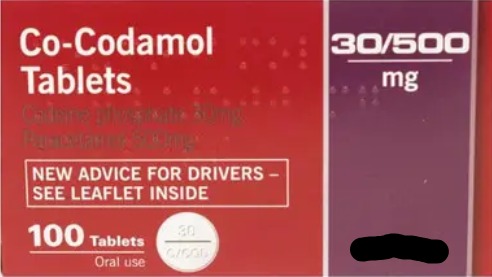
We want to talk to you about co-codamol. There is a UK wide lack of supply of co-codamol 30/500mg and stocks will be very limited from early February until June. This means you may not receive your usual supply of co-codamol 30/500. Your prescriber or pharmacist may discuss alternative options with you which can include other medications and a gradual reduction plan.
We also want to talk about why reducing your co-codamol might actually help. Each co-codamol 30/500 tablet is equivalent to 3mg of morphine. So for people taking 8 per day this is the same as taking 24mg of morphine. The science on co-codamol has changed. These were initially prescribed in good faith but we now know that regular co-codamol is not recommended long term and many people don’t find it helps as much as they used to think.
Regular use can lead to tolerance where the medication no longer works. Side effects are also common and these include tiredness, constipation, nausea, sleep and memory problems. For older people this can also lead to confusion and falls. It can also lead to dependence and withdrawal symptoms especially if stopped suddenly.
We want to talk about how to reduce safely. A typical reduction is one tablet every 1-2 weeks. In the current situation a faster reduction of 1 tablet every 3-7 days may be possible. If you encounter withdrawal side effects such as flu like symptoms, agitation, sweating then the pace can be slowed down.
Finally, here are some things you can do now
1. If you are taking co-codamol from time to time please stop and look for alternative medication options
2. If you are taking co-codamol regularly start reducing it now with a suggested reduction of one tablet a week
3. Please avoid stockpiling as we want available supplies to last as long as possible
4. Learn about harm with opioids by going to live well with pain website and reading the great opioid side effect lottery sheet: Live Well with Pain
5. If you want more support on reducing medication then please speak to your GP practice based pharmacist
6. Consider alternatives – many people do well on simpler pain relief and non-medication based pain management
7. Find out what helps. Options include the chronic pain section on NHS inform: Information and Resources for People Living With Chronic Pain – NHSGGC,
8. If you feel unable to reduce or are extremely distressed by this information then please speak to your GP to explore more options
Other resources you may find helpful:
NHS Lanarkshire Patient Information Leaflet
Kind Regards,
Clarkston Medical